
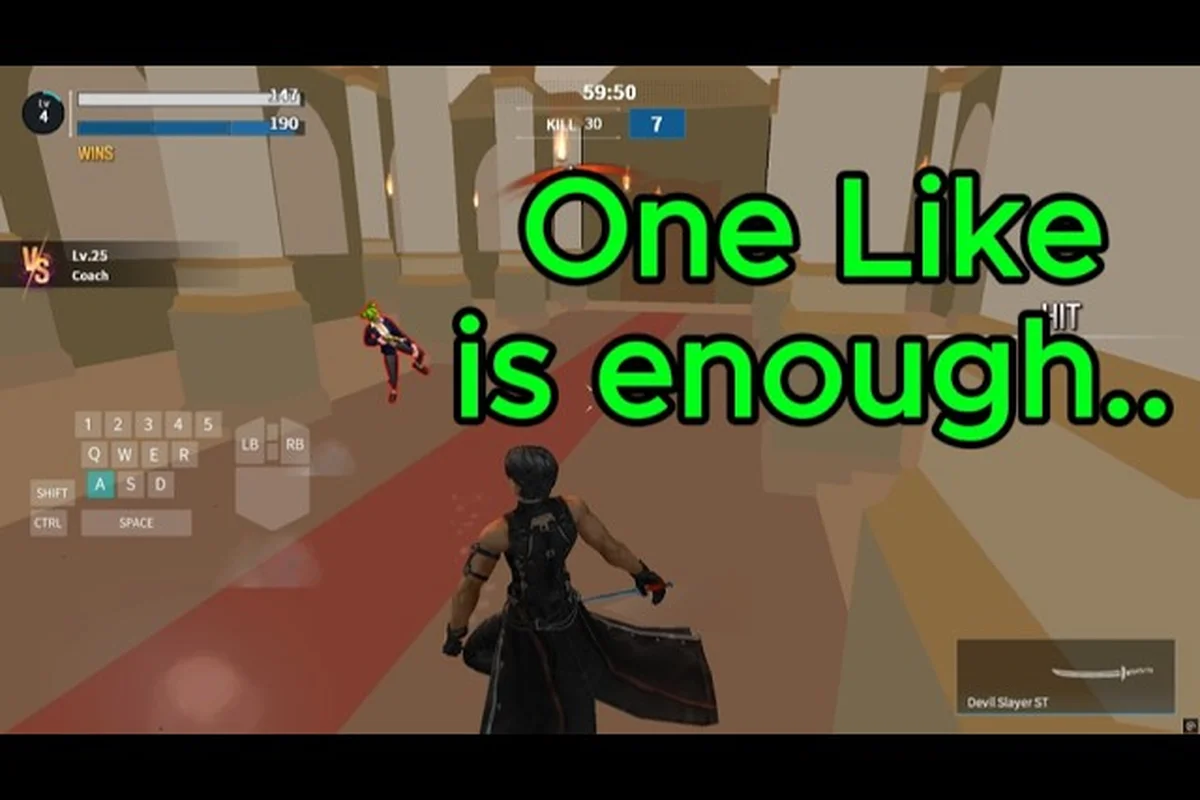
Winning a duel in GunZ: The Duel starts before the first slash lands. The GunZ The Duel map pick phase determines whether you fight in a tight corridor where melee dominates or an open arena where ranged players control the tempo, and knowing how to use the ban system gives you a measurable edge over opponents who treat map selection as an afterthought. This GunZ The Duel map guide 2026 breaks down every arena category, explains how voting and bans shape match rotation, and gives you a practical framework for forcing favorable fights every time you queue.
How the GunZ The Duel Map Pick and Ban System Works
The pre-match lobby in GunZ: The Duel uses a two-phase selection process that determines which arena you fight on. Understanding this flow matters because it directly influences your win rate, especially in ranked play where every percentage point counts. The system works differently depending on whether you queue solo or with a party, and the 2026 patch refined how vetoes are distributed.
The first phase presents a random pool of three to five maps drawn from the current rotation. Each player then casts a vote for their preferred arena, and the map with the most votes enters the match. When votes tie, the system applies a random tiebreaker weighted by player rank, which means higher-ranked players have slightly more influence in deadlocked lobbies. The second phase, available only in ranked and tournament modes, is the ban phase where each player can veto one map from the pool before voting begins.
Ban priority follows a strict order: the highest-ranked player in the lobby bans first, then the second-highest, and so on. This creates a strategic layer because the first ban often removes the strongest map for the opposing team's playstyle rather than the weakest map overall. In team modes, the captain's ban is the only one that counts, so coordinating who holds captain before the match starts is part of the meta.
The map count in the 2026 rotation sits at 14 arenas across three categories: 6 duel arena maps, 5 PvE stages, and 3 training/practice maps. The training maps never appear in the pick phase, which means competitive play draws from an effective pool of 11 maps. According to the official GunZ: The Duel website, map choice shapes strategy because small maps favor close-range melee and fast duels while large maps reward ranged play and rotation.
| Phase | Mode Availability | Player Count | Strategic Weight |
|---|---|---|---|
| Vote | All modes | All players | Low-medium, diluted by random pool |
| Ban | Ranked + Tournament | Highest rank only | High, removes one map entirely |
| Tiebreaker | All modes | System-weighted | Medium, rank influences outcome |
Breaking Down the Duel Arena Maps by Playstyle
Small-Map Melee Priority: Why Mansion Favors the Butterfly Combo
On close-quarters arenas like Mansion, the official site confirms small maps favor melee and fast duels. With wall-run friendly vertical structures, a player who initiates a Butterfly combo (slash-dash-slash) from a wall-run gains a 0.3–0.5 second advantage over a grounded opponent. In practice, this means you should ban Mansion if your loadout relies on ranged weapons like the Revolver, as the tight corridors negate your damage advantage. Conversely, if your K-Style execution is sharp, voting Mansion forces opponents into your optimal engagement range.
PvE Stage Selection: Matching Map Geometry to Boss Patterns
PvE stages change your map strategy because boss patterns dictate positioning. On stages with a single large boss, like the Garden of Tears, the open floor plan lets you maintain distance while the boss telegraphs its attack. However, on multi-wave stages with adds, the map's vertical structures become essential—wall-running to a higher ledge lets you isolate a single enemy from the pack. The quest currency earned per stage is fixed, but your clear speed varies by 20–30% depending on whether your map choice supports your weapon's optimal range.
The 6 duel arena maps in GunZ: The Duel each reward a different combination of movement, weapon choice, and positioning. Learning which maps suit your strengths is the foundation of a smart GunZ The Duel map pick strategy, because you can then vote for arenas that amplify your game while banning the ones that punish it.
Mansion is the smallest arena in the rotation, featuring tight hallways and a central staircase. This map heavily favors melee-focused K-Style play because wall-run chains are easy to execute on the narrow vertical surfaces, and opponents have limited escape routes. Shotgun users also perform well here because the confined spaces guarantee close-range engagements. Ranged players struggle on Mansion because sightlines are short and cover is abundant, making it hard to maintain distance.
Prison offers a medium-sized layout with two floors and a central courtyard. This is the most balanced arena in the pool, which makes it a safe default vote when you are unsure about the opponent's strengths. The courtyard rewards mid-range combat while the upper corridors favor dash-and-slash melee tactics. Because Prison supports multiple playstyles, it rarely gets banned, and winning on it usually comes down to individual mechanical skill rather than map knowledge.
Station is the largest duel arena, with long sightlines and open platforms that reward ranged combat and careful rotation. Rifle and SMG users dominate here because they can control sightlines and punish opponents who try to close the distance. Wall-running is still possible but riskier because the open spaces expose you to fire from multiple angles. Players who rely on aggressive melee pressure often ban Station because the map's size makes it difficult to force engagements.
Factory introduces verticality with multiple stacked platforms connected by narrow catwalks. This map rewards players who master air combat and wall-run chains, because controlling the high ground gives you a significant advantage over opponents stuck at lower elevations. The catwalks create natural chokepoints where melee users can ambush ranged players, but falling off the map is a constant risk that punishes over-aggressive movement.
Roof is a compact rooftop arena with limited cover and open sightlines. This map favors aggressive play because there are few places to hide, and the fast pace rewards players who can execute combos quickly. The lack of cover means that dash mechanics become your primary defensive tool, and players who master evasion tend to outperform those who rely on blocking. Roof is a popular ban target for defensive players who prefer slower, more methodical fights.
Garden rounds out the duel arena pool with a hybrid layout that mixes open spaces with dense foliage cover. The visual clutter makes it harder to track opponents, which rewards players who use stealth and positioning over raw aggression. Garden is the most polarizing map in the pool because some players find the visual noise distracting while others use it to their advantage. Understanding your own tolerance for visual clutter should factor into your GunZ The Duel map pick decisions.
| Arena Map | Size | Best Playstyle | Worst Matchup | Ban Priority |
|---|---|---|---|---|
| Mansion | Small | Melee, Shotgun | Ranged | High for ranged players |
| Prison | Medium | Balanced | None | Low, safe default |
| Station | Large | Ranged, SMG | Melee | High for melee players |
| Factory | Medium-large | Air combat, K-Style | Ground-based | Medium |
| Roof | Small | Aggressive, Dash-heavy | Defensive | Medium-high |
| Garden | Medium | Stealth, Positioning | Direct combat | Low-medium |
PvE Stages and How They Affect Your Map Strategy
Large-Map Rotation: Using the Mausoleum's Sightlines for Ranged Control
Large maps like Mausoleum reward ranged play and rotation. The map's long central corridor provides a sightline that punishes wall-runners who fail to break line-of-sight. A concrete strategy is to hold the elevated platform at the corridor's midpoint, forcing enemies to approach through one of two chokepoints. This lets you land two to three Rifle shots before they close to melee range. Data from official media shows these vertical structures are designed for wall-running, so expect skilled opponents to flank via the upper ledges—always keep a dash ready to reset your position.
Ban Order Tactics: Protecting Your K-Style Advantage in Ranked
In ranked play, the ban order should protect your K-Style movement advantage. If your best map is a wall-run friendly arena like the Prison, ban the largest map first to prevent a ranged player from forcing a rotation-heavy match. Data shows that banning a map you struggle on is less valuable than banning a map that neutralizes your opponent's weakness. A concrete case: if your opponent is a known melee specialist, leave small maps open and ban a mid-sized map like the Courtyard, which offers balanced sightlines that dilute your close-range pressure. This forces the duel onto your terms.
The 5 PvE stages in GunZ: The Duel operate on a completely different selection system than the duel arenas, but they still matter for your overall GunZ The Duel map pick strategy because they influence your progression and loadout choices. PvE stages never appear in the competitive map vote, yet understanding them helps you farm resources more efficiently, which indirectly improves your PvP performance through better gear.
Training Ground is the first PvE stage and serves as the tutorial arena for new players. It features stationary targets and slow-moving dummies that teach basic combat mechanics without pressure. While the rewards are minimal, completing Training Ground unlocks the other PvE stages and grants a small amount of starting currency. Most players clear this stage once and never return, but it remains valuable for testing new weapon builds in a safe environment.
Crimson Fortress is a defense-style stage where waves of enemies attack a central point. This stage rewards crowd-control weapons like shotguns and SMGs because enemies swarm from multiple directions. The boss encounter at wave 10 requires coordinated team focus, and players who understand the boss attack patterns can clear this stage significantly faster. Crimson Fortress offers the best currency-to-time ratio in the early game, making it the go-to farming spot for new players.
Frozen Tundra introduces environmental hazards that change how you approach combat. Slippery ice patches reduce movement control, and freezing winds deal damage over time if you stay in exposed areas. This stage rewards players who adapt their movement to the terrain, and it is the first PvE stage where K-Style movement becomes genuinely useful for dodging environmental damage. The boss encounter features a large ice golem with telegraphed slam attacks that punish players who stand still.
Abandoned Laboratory is a stealth-focused stage where enemies have heightened awareness and alarm systems trigger reinforcements. This stage rewards precise, methodical play over aggressive rushing, and it is the only PvE stage where melee weapons are genuinely optimal because gunfire alerts enemies faster. The laboratory features multiple branching paths, and the route you choose determines which mini-boss you encounter before the final confrontation.
The Void Gate is the endgame PvE stage with the highest difficulty and the best rewards. It features three consecutive boss encounters with escalating mechanics, and clearing it requires a coordinated team with optimized loadouts. The Void Gate drops exclusive cosmetic items and the highest-tier currency, making it the primary endgame farming destination. According to community reports, the final boss has an enrage timer that forces teams to maintain consistent damage output, which is why most serious farming groups run dedicated DPS compositions.
| PvE Stage | Difficulty | Best Weapon Types | Primary Reward | Recommended For |
|---|---|---|---|---|
| Training Ground | Beginner | Any | Starter currency | New players |
| Crimson Fortress | Easy | Shotgun, SMG | Early currency | Early farming |
| Frozen Tundra | Medium | Rifle, Dagger | Mid-tier currency | Movement practice |
| Abandoned Laboratory | Medium-hard | Melee, Dagger | Rare components | Stealth practice |
| The Void Gate | Hard | Optimized builds | Exclusive cosmetics | Endgame farming |
Advanced Voting and Ban Strategies for Ranked Play
Once you understand the map pool, the next step is developing a coherent ban and voting strategy that adapts to your opponent. The GunZ The Duel map ban system rewards players who think beyond their own preferences and consider what the opponent wants to play. This section covers practical strategies for both solo and team queues.
Solo queue strategy revolves around self-awareness and consistency. Before you queue, identify your two strongest maps and your two weakest maps. Your ban should always target your weakest map, not the opponent's strongest, because in solo queue you have no information about the opponent's playstyle. Your vote should go to your strongest map, but you should also consider which maps are popular in the current meta. If a map is frequently banned by the wider player base, it might be worth learning it specifically because opponents will rarely have practice on it.
Team queue strategy requires coordination and role assignment. The captain should communicate the ban target before the phase begins, and the decision should factor in the team's collective strengths rather than any individual player's preference. A team with two melee specialists and one ranged player should ban large open maps like Station, while a team with two ranged players should ban small close-quarters maps like Mansion. The captain's ban is the only one that matters, so the rest of the team should focus their votes on the team's strongest map.
Meta awareness plays a significant role in effective map picks. When a new patch shifts weapon balance, the value of certain maps changes accordingly. For example, if a patch buffs SMG damage, Station and Garden become stronger picks because they reward ranged combat. Tracking patch notes and adjusting your map preferences accordingly is a habit that separates top players from the rest. The GunZ: The Duel Steam page is the best source for official patch information and balance changes.
Counter-picking is an advanced strategy that involves observing your opponent's tendencies during warm-up matches or previous rounds. If you notice an opponent consistently votes for Mansion, they likely have a strong melee game. Banning Mansion forces them onto a map where they are less comfortable, which can tilt the match in your favor before it even starts. This strategy requires attention and adaptability, but it is the highest-leverage use of the ban system.
Map-specific loadout adjustments complete your pre-match preparation. Once you know which map you will fight on, you can adjust your weapon and accessory loadout to match the arena's characteristics. Small maps call for shotguns and melee weapons, while large maps reward rifles and SMGs. This flexibility is a core part of the best map for duels guide, which breaks down optimal loadouts for each arena in detail.
Training Maps and How to Use Them for Improvement
The 3 training maps in GunZ: The Duel never appear in competitive rotation, but they are essential tools for improving your mechanics and testing strategies. According to the official GunZ: The Duel media page, training and practice maps give new players a safe space to learn wall-run, dash, and combo timings before competitive arenas. Integrating training map practice into your routine directly improves your performance on the duel arena maps.
Basic Training is the simplest training map, featuring flat ground and stationary targets. This map is ideal for practicing core K-Style inputs like dash-dash-jump and sword cancel without the pressure of enemy fire. The flat layout removes environmental variables, letting you focus purely on execution. Most players use Basic Training to warm up their fingers before queuing for ranked matches, and even advanced players spend five to ten minutes here to maintain consistency.
Obstacle Course introduces movement challenges that require wall-runs, precise jumps, and timed dashes. This map is the best place to practice advanced movement techniques because it forces you to chain multiple actions in sequence. The course has multiple difficulty tiers, and completing the hardest tier requires near-perfect execution of every major movement mechanic. Players who can clear the hardest tier consistently have the mechanical foundation to compete at high levels.
Combat Practice features moving targets and dummy opponents that simulate real combat scenarios. This map is ideal for practicing combos and weapon switching because the dummies have hit reactions that mimic player behavior. You can also set the dummies to attack back, which helps you practice defensive techniques like blocking and evasion. Combat Practice is the closest you can get to real PvP without actually queuing, making it the best map for refining your combat flow.
| Training Map | Primary Focus | Best For | Recommended Frequency |
|---|---|---|---|
| Basic Training | Core inputs | Warm-ups | Daily, 5-10 minutes |
| Obstacle Course | Movement chains | Advanced movement | 2-3 times per week |
| Combat Practice | Combos and defense | Combat flow | Before ranked sessions |
Building a Personal Map Pick Framework
Developing a personal GunZ The Duel map pick framework requires honest self-assessment and continuous refinement. Rather than following generic advice, you need to understand your own strengths, weaknesses, and preferences, then build a decision-making system around them. This section provides a step-by-step framework you can adapt to your own playstyle.
Step one: self-assessment. Rank all 6 duel arena maps from strongest to weakest for your personal playstyle. Be honest about which maps you win on consistently and which ones you struggle with. Your win rate on each map is the most reliable data point, but you should also consider subjective factors like comfort level and enjoyment. A map you dislike but win on is still a strong map for you, and vice versa.
Step two: identify your ban priority. Your ban should always target your weakest map, but you should also consider how common that map is in the current rotation. If your weakest map rarely appears in the vote pool, you might be better off banning a map that appears frequently and that you only moderately struggle with. This optimization requires tracking which maps appear most often in your matches over a sample of at least 20 games.
Step three: define your vote hierarchy. Rank your strongest maps in order of preference, but also factor in how likely each map is to win the vote. A map that you are strong on but that rarely wins the vote is less valuable than a map you are moderately strong on that frequently wins. Your vote should maximize the probability of landing on a map where you have an advantage, not just your absolute strongest map.
Step four: review and adjust. Your map preferences should evolve as your skills improve and as the meta shifts. Review your framework every two weeks, or after any significant patch that affects weapon balance. The comprehensive map guide provides updated information on the full map pool and how balance changes affect each arena, which is a useful reference for your reviews.
Step five: practice your weak maps. The best long-term strategy is to eliminate your weaknesses rather than just ban around them. Spend time on your weakest maps in casual mode, using the training map guide to structure your practice sessions. As your weak maps become average and your average maps become strong, your ban becomes a flexible tool rather than a necessity.
Frequently Asked Questions
How does the GunZ The Duel map pick system work in ranked matches?
Ranked matches use a two-phase system where players first vote on a random pool of three to five maps, then the highest-ranked player in the lobby can ban one map before voting begins. The ban phase happens first in tournament modes, while standard ranked matches use a single combined phase where bans and votes happen simultaneously.
What is the best GunZ The Duel map ban strategy for solo players?
Solo players should ban their personal weakest map rather than trying to counter the opponent, because you have no information about their playstyle before the match. Focus your vote on your strongest map, but consider how frequently each map appears in rotation. Learning to play your weak maps better is the most effective long-term improvement strategy.
How many maps are in the GunZ The Duel 2026 rotation?
The 2026 rotation includes 14 total maps: 6 duel arena maps, 5 PvE stages, and 3 training maps. Only the 6 duel arena maps and 5 PvE stages appear in matchmaking, while training maps are exclusively for practice. The competitive map pool is effectively 11 maps since training maps never enter the pick phase.
Do PvE stages affect my PvP map pick strategy?
PvE stages do not appear in the competitive map vote, but they indirectly affect your PvP performance through resource farming and gear progression. Efficiently farming PvE stages gives you better weapons and accessories, which can compensate for unfavorable map matchups. The Void Gate offers the best endgame rewards for this purpose.
Can I practice map-specific strategies before ranked matches?
Yes. Training maps only teach core K-Style mechanics like wall-run, dash, and slash-shot timing—they don't replicate duel arena layouts. For map-specific practice, queue casual mode and vote for your target arena. Casual mirrors ranked's map pool and voting system, so you can refine rotation and melee positioning before competitive play.