
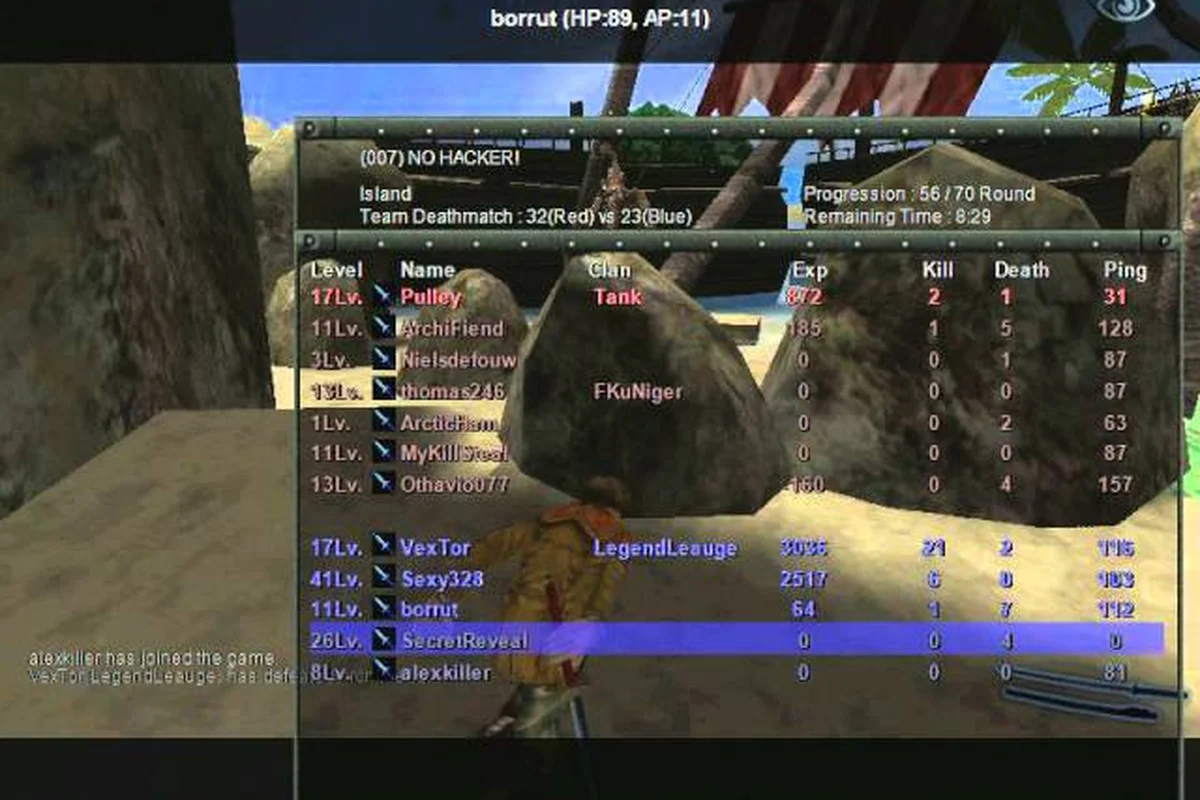
GunZ The Duel quest maps are the foundation of every match you play, whether you are grinding co-op boss fights or climbing the ranked ladder in PvP arenas. Understanding the layout differences between Duel, TDM, and quest maps directly affects your positioning, your K-Style execution, and ultimately your win rate. This breakdown covers map sizes, rotation schedules, and the wall run routes that separate average players from those who control the arena.
The official GunZ: The Duel website splits the map pool into two clear families: PvP arena maps for Duel, TDM, Gladiator, and Battle Arena, plus PvE quest maps designed for co-op missions and boss encounters. Arena maps feature walls, ramps, and elevated platforms that enable K-Style wall-runs and air combat, while quest maps prioritize larger traversal spaces and enemy spawn patterns. Knowing which family you are entering changes how you approach every engagement, so let us break down each category in detail.
Duel Maps: Layouts Built for One-on-One Combat
Duel maps in GunZ The Duel are compact by design, usually no larger than a single screen-and-a-half across, because the mode demands constant pressure and quick reset times. The official media showcases arena maps with vertical structures for wall-running, which means even the smallest Duel map gives you at least two or three viable wall run surfaces to work with. These maps typically feature a central platform or pillar, flanking corridors, and elevated ledges that reward players who control high ground.
The map size in Duel arenas is the single most important factor for your weapon choice, since shorter sightlines favor melee pressure and shotgun play over long-range rifle work. Most Duel maps fall into the small map category with an effective combat radius of roughly 20 to 30 meters, which means you can cross the arena in two or three dash-jump chains. This tight geometry forces engagements to happen quickly, so your ability to chain dashes and wall runs determines whether you dictate the pace or react to your opponent's movement.
Here is a quick reference for the core Duel map archetypes you will encounter in the 2026 season, organized by the verticality and spacing that define GunZ The Duel duel maps. You will see tight, wall-run-friendly arenas like Mansion and Prison, where the cramped corridors force close-range shot-lock and sword clashes, contrasted with open layouts like Garden, which demand precise lead-tracking with the Revolver or Shotgun. Understanding these archetypes is critical because your map rotation strategy—whether to rush for the high-ground ledge or bait around a central pillar—directly dictates your dash-cancel timing and reload windows.
| Map Archetype | Effective Size | Wall Run Surfaces | Best Weapon Class |
|---|---|---|---|
| Symmetrical Arena | Small (~25m) | 4+ vertical walls | Melee / Shotgun |
| Vertical Tower | Small-Medium (~35m) | 6+ multi-level walls | SMG / Hybrid |
| Corridor Layout | Small (~20m) | 2-3 narrow walls | Dagger / Melee |
| Open Platform | Medium (~45m) | 3 elevated ledges | Rifle / Sniper |
The symmetrical arena is the most common Duel map type because it gives both players identical access to wall run routes and high-ground positions. According to community reports, these maps favor aggressive players who can chain wall runs into aerial slashes, since the open center leaves little room for passive play. The vertical tower archetype, by contrast, rewards players who master multi-level wall runs, because you can drop down on an opponent from an angle they are not expecting.
Your GunZ The Duel map strategy on Duel maps should always prioritize controlling the central high-ground point, since that position gives you the clearest sightlines and the most wall run options. When you hold the elevated platform, you force your opponent to approach through predictable lanes, which lets you punish their dashes with well-timed melee counters. If you are struggling with wall run execution on these compact arenas, the GunZ K-Style guide breaks down the exact input sequences for dash-jump chains and wall-run transitions.
TDM Maps: Team-Based Layouts and Spawn Control
Quest Map Boss Arenas: PvE Layouts and K-Style Synergy
Quest maps in GunZ: The Duel are PvE co-op missions that culminate in boss fights, with arenas designed to accommodate both close and long-range weapons. Unlike Duel maps, these arenas feature larger open spaces to allow for multi-player positioning during boss encounters. The official site confirms that these PvE layouts include walls, ramps, and elevated platforms, enabling K-Style wall-runs and air combat even against AI-controlled bosses. This verticality lets players maintain mobility while dodging boss attacks, creating a distinct combat rhythm from the one-on-one focus of Duel arenas.
Quest Map Boss Mechanics: Positioning and Weapon Choice
Effective boss fights in quest maps require strategic positioning that leverages the arena's vertical structures. Players should use elevated platforms to gain a temporary advantage, creating distance to use long-range weapons before closing in for melee combos. The mix of close and long-range weapons means that a player's loadout must adapt to the boss's attack patterns. For example, a player might use a shotgun for high burst damage during a boss's recovery animation, then switch to a rifle to maintain damage output while retreating. This dynamic weapon switching is a core part of the PvE experience.
Team Deathmatch maps in GunZ The Duel scale up significantly compared to Duel arenas, with GunZ The Duel TDM maps typically ranging from 60 to 100 meters across to accommodate eight to sixteen players. These larger layouts introduce multiple lanes, central chokepoints, and flanking routes that require coordinated team movement rather than solo mechanical dominance. The official website notes that TDM maps feature the same wall-run-friendly structures as Duel arenas, but the increased scale means you need to plan your traversal more carefully.
The map size difference between Duel and TDM maps changes your loadout priorities, since longer sightlines make ranged weapons more viable while still rewarding melee players who can close distance through wall runs. TDM maps usually have two or three main lanes that converge on a central objective point, with side corridors that allow skilled players to flank behind enemy lines. Understanding these lane structures is critical because spawn control in TDM often decides the match — the team that controls the central map area can pressure both enemy spawn exits simultaneously.
Common TDM maps in GunZ The Duel are built around three recurring archetypes—symmetric mirrored arenas (like Mansion), vertical split-level complexes (like Prison), and narrow corridor chains—each dictating a distinct spawn-control rhythm. The mirrored layouts reward aggressive mid-map wall-run engagements, since both teams reach the central pillar or balcony at nearly identical timings, turning the opening clash into a pure dash-and-slash duel. Conversely, corridor-heavy maps funnel fights into chokepoints, making shotgun or sword dash spam more viable, while the team that locks down the upper ledge gains sightline dominance over lower spawn exits. Understanding these size and rotation patterns lets you pre-position for the enemy's predictable respawn wave rather than reacting late.
| TDM Map Type | Player Count | Lane Structure | Spawn Distance | Dominant Strategy |
|---|---|---|---|---|
| Three-Lane Arena | 8-12 | 3 parallel lanes | Medium (~40m) | Lane control + rotation |
| Central Fortress | 12-16 | 2 lanes + mid | Short (~25m) | Mid control + flank |
| Sprawling Complex | 10-14 | 4+ interlocking lanes | Long (~60m) | Flanking + wall runs |
| Vertical Battleground | 8-10 | Multi-level platforms | Medium (~35m) | High-ground control |
The three-lane arena is the most balanced TDM layout because it gives both teams equal access to the central objective while allowing individual players to choose their preferred engagement range. Players who master the central fortress archetype report that controlling the mid-point is worth more than any individual kill, since it lets your team collapse on enemies from two directions. The sprawling complex maps are where wall run proficiency really shines, because you can bypass ground-level chokepoints entirely by traversing the upper ledges.
Your GunZ The Duel map strategy for TDM should focus on rotation timing — knowing when to push a lane, when to fall back, and when to rotate through a side corridor to catch enemies off guard. The best TDM teams assign one or two players to hold the central point while the rest of the squad applies pressure on the flanks, which forces the enemy team to split their attention. If you want to practice the wall run routes that make flanking effective, the training map guide covers the practice arenas where you can drill these movement patterns safely.
PvE Quest Map Layouts and Boss Encounters
Quest Map Co-op Progression: From Training to Boss Fights
The progression from training maps to quest boss arenas is a critical path for new players. Official media highlights that training and practice maps provide a safe space to learn wall-run, dash, and combo timings before entering competitive arenas. This applies directly to quest maps, where mastering K-Style movement is essential for surviving boss encounters. By practicing dash-cancel combos and wall-run techniques in training maps, players can build the muscle memory needed to execute these maneuvers under the pressure of a PvE boss fight, where a single mistimed dash can result in significant damage.
Quest Map Rewards and Progression: A Data-Driven Look
While specific drop rates are not officially published, the risk-reward structure of quest maps is a key motivator for players. The progression from training maps to more difficult quest maps is designed to provide a steady curve of challenge and reward. Players can expect to earn experience and in-game currency from successful quest completions, which are then used to purchase new weapons and gear. This creates a loop where players are incentivized to master the K-Style mechanics in PvE to become more effective in PvP arenas, as the skills are directly transferable.
GunZ The Duel quest maps are fundamentally different from their PvP counterparts because they are designed around enemy spawn patterns, boss encounters, and cooperative progression rather than symmetrical competitive fairness. These maps are typically larger and more linear, guiding players through a series of encounter zones before culminating in a boss arena. The official website confirms that quest maps are built for co-op missions and boss fights, which means the layout prioritizes traversal efficiency and safe positioning over wall run opportunities.
The map size for quest maps varies dramatically depending on the quest tier, with early missions spanning roughly 80 meters while endgame raid-style quests can stretch beyond 200 meters. This scale difference matters because it directly affects your GunZ The Duel PvE XP farming efficiency — shorter maps allow faster clears but offer less total experience, while longer maps take more time but reward more per completion. Players who optimize their quest runs typically memorize the shortest path through each map, skipping optional encounters when the XP-per-minute calculation favors speed.
Here is a comparison of the quest map types you will encounter, and the distinctions matter far more than mere aesthetics. Unlike the symmetric, arena-style layouts of GunZ The Duel TDM maps or the tight corridors of duel maps, quest maps are built around asymmetric PvE progression. You will typically face either linear "dungeon crawls" (like the sprawling Mansion, which funnels you through narrow hallways to trigger scripted spawns) or open "boss arena" designs (such as the Prison's central yard, which offers ample wall-run surfaces for kiting). This structural difference dictates your entire GunZ The Duel map strategy: in linear maps, you must manage aggro and conserve ammo for the next room, whereas in arena maps, the priority shifts to maintaining momentum on walls to avoid the boss’s AoE attacks, making map size and verticality your primary defensive tools.
| Quest Map Type | Map Size | Enemy Density | Boss Arena Size | Best Farming Strategy |
|---|---|---|---|---|
| Training Grounds | Small (~80m) | Low | Small (~30m) | Speed runs |
| Standard Quest | Medium (~120m) | Medium | Medium (~45m) | Balanced clear |
| Elite Quest | Large (~160m) | High | Large (~60m) | Full clear |
| Boss Raid | Very Large (~200m+) | Very High | Very Large (~80m) | Coordinated team |
The training grounds quest maps serve a dual purpose — they introduce new players to PvE mechanics while also providing a reliable source of early-game currency and experience. According to community data, these maps are also the best place to practice wall run routes in a low-pressure environment, since the enemy density is low enough that you can focus on movement execution. The standard quest maps strike the balance between clear time and rewards, making them the most popular farming destination for mid-level players.
Your GunZ The Duel map strategy for quest maps should prioritize learning the boss arena layouts, because that is where most failed runs happen. Each boss arena has specific safe zones, wall run surfaces, and environmental hazards that you need to memorize for consistent clears. The boss raid maps in particular demand precise coordination, since the large arena size means your team needs to maintain positioning while managing enemy spawns and boss mechanics simultaneously.
Wall Run Maps: Mastering Vertical Traversal
Wall run maps in GunZ The Duel are the arenas where vertical movement becomes the primary differentiator between skilled and average players. These maps feature extensive wall surfaces, multi-level platforms, and elevated ledges that reward players who can chain wall runs into aerial combat. The official media highlights these vertical structures as a core part of the game's identity, which means mastering them is non-negotiable for competitive play.
The GunZ The Duel wall run maps category includes both PvP arenas and quest zones, but the most demanding examples are found in the competitive PvP pool. These maps typically have 6 to 10 distinct wall run surfaces arranged in sequences that allow skilled players to traverse the entire arena without touching the ground. Learning these routes gives you a massive tactical advantage because you can approach enemies from angles they are not monitoring, especially in chaotic TDM matches.
While raw speed matters, mastering vertical combat on GunZ The Duel quest maps hinges on identifying which wall run maps offer the highest wall-run density and favorable geometry for chained wall flips. For instance, the Garden of Life’s central fountain columns and the Mansion’s multi-tiered staircases provide continuous, uninterrupted wall surfaces, allowing for sustained butterfly-style climbing that flat, open TDM maps like Prison simply cannot support. Prioritize these tighter, object-rich arenas over sprawling layouts to effectively grind your dash-cancel timing and aerial aim.
| Map Name | Wall Run Surfaces | Verticality Rating | Best For | Difficulty |
|---|---|---|---|---|
| Vertical Tower | 8+ surfaces | 9/10 | Air combo practice | Advanced |
| Sprawling Complex | 6+ surfaces | 7/10 | Flank routes | Intermediate |
| Central Fortress | 5+ surfaces | 6/10 | Mid-fight repositioning | Beginner |
| Boss Raid Arena | 7+ surfaces | 8/10 | PvE mobility | Intermediate |
The vertical tower map is widely considered the gold standard for wall run practice because its multi-level structure lets you chain three or four wall runs in a single combo. Players who master this map report that their overall K-Style execution improves significantly, since the demanding movement sequences translate directly to other arenas. The sprawling complex map is the best choice for learning practical flank routes, because its interlocking lanes give you multiple ways to approach any engagement.
Your GunZ The Duel map strategy on wall run maps should always include at least one vertical escape route — a wall run sequence that lets you disengage from a losing fight and reposition to a safer angle. This is especially important in TDM, where getting caught in a bad position often means instant death from multiple enemies. If you want a comprehensive breakdown of the movement techniques these maps demand, the wall run and dash guide compares the different map types and their movement requirements in detail.
Adapting Your Pick When the Vote Goes Wrong
The GunZ The Duel map rotation system determines which maps you play in matchmaking, and understanding it lets you prepare for the arenas you are most likely to encounter. The rotation schedule rotates through the full map pool on a regular cycle, but player voting can override the default order in most modes. According to community reports, the voting system tends to favor smaller, faster-paced maps in Duel mode while TDM players often prefer medium-sized arenas that balance action and strategy.
Your GunZ The Duel map strategy for the voting phase should consider both your personal strengths and your team composition. If you are playing solo, voting for maps that match your preferred weapon class gives you a significant advantage over players who are less comfortable with that layout. If you are in a coordinated team, you can vote for maps that amplify your squad's tactical approach, such as wall run-heavy arenas if your team has strong vertical movement players.
Rotation timing differs sharply across GunZ The Duel's three primary playlist types: quest maps like Mansion and Prison require the longest voting windows (typically 30+ seconds) because players must weigh PvE boss-phase pacing against PvP ambush points, while duel maps (e.g., Town, Battle Arena) benefit from shorter 15-second timers to keep 1v1 momentum alive. TDM maps such as Courtyard and Mausoleum sit in between, where a 20-second window lets squads coordinate class picks—swapping a sword-and-gun hybrid for a pure wall-run sniper—before the next rotation triggers. Voting weight also matters: quest maps with loot drops (like the Prison's keycard room) often get pre-voted by farming parties, so a smart host can override the default randomizer to skip a map already played twice in a row. This prevents fatigue on wall-run-heavy layouts and keeps the server's pace aligned with player skill distribution.
| Mode | Rotation Size | Voting Weight | Preferred Map Size | Meta Impact |
|---|---|---|---|---|
| Duel | 6-8 maps | High | Small | High |
| TDM | 8-10 maps | Medium | Medium | Medium |
| Quest | 5-6 maps | Low | Large | Low |
| Gladiator | 4-5 maps | High | Small-Medium | High |
The Duel mode rotation is the most competitive because the small map pool means players can master every arena in the cycle, which raises the overall skill ceiling. Players who want to climb the ranked ladder should practice every map in the Duel rotation rather than focusing on one or two favorites, because the voting system will eventually force you onto less comfortable arenas. The TDM rotation is more forgiving because the larger maps give you more room to adapt your playstyle mid-match.
Your GunZ The Duel map strategy for rotation should also account for the meta shifts that happen with each balance patch. When the developer adjusts weapon stats, the optimal map choices can change dramatically — for example, a buff to melee weapons makes smaller maps more attractive, while a rifle buff pushes players toward larger arenas. Staying flexible and practicing across the full rotation ensures you are never caught off guard by a meta shift.
Frequently Asked Questions
What is the difference between GunZ The Duel quest maps and duel maps?
GunZ The Duel quest maps are PvE arenas designed for co-op missions and boss fights, featuring larger layouts and enemy spawn patterns. Duel maps are compact PvP arenas built for one-on-one combat with symmetrical layouts and wall run surfaces that enable K-Style execution.
How does map size affect my weapon choice in GunZ The Duel?
Map size directly impacts your effective engagement range. Small duel maps favor melee weapons and shotguns because short sightlines force close-quarters combat, while larger TDM and quest maps make rifles and SMGs more viable due to longer sightlines and more traversal space.
What are the best wall run maps for practicing K-Style?
The vertical tower map is the best choice for wall run practice because its multi-level structure allows you to chain multiple wall runs in a single combo. The sprawling complex map is also excellent for learning practical flank routes that translate directly to competitive matches.
How does the map rotation system work in GunZ The Duel?
The map rotation cycles through the full map pool on a regular schedule, but player voting can override the default order in most modes. Duel mode has a smaller rotation pool that raises the competitive skill ceiling, while TDM and quest modes feature larger rotations with more variety.
Which map type is best for farming GunZ The Duel PvE XP?
Standard quest maps offer the best balance between clear time and experience rewards, making them the most efficient farming destination for mid-level players. Training grounds maps are faster but offer less XP, while elite quests and boss raids provide more rewards but require significantly more time and coordination.