
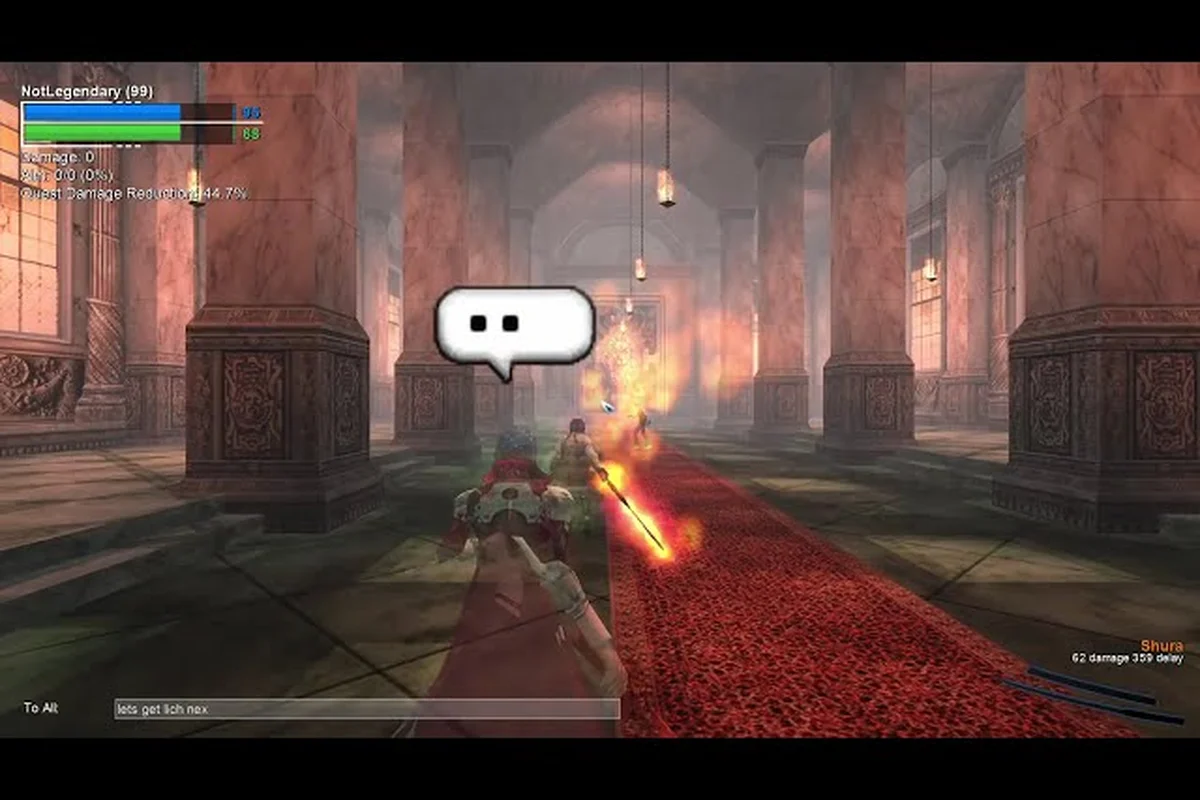
The GunZ The Duel boss guide you are about to read breaks down every epic boss encounter in the remastered 2026 release, giving you the exact mechanics, phase transitions, and team compositions needed to clear the toughest PvE content. Epic boss fights in this free-to-play title are team-based challenges where coordination matters more than raw aim, which is why understanding attack patterns before you queue up can save your squad from repeated wipes. Whether you are a returning veteran from the 2003 classic or a newcomer drawn in by the Steam global launch on August 13, 2026, this GunZ The Duel boss guide will transform you from a liability into the player your party relies on when the enrage timer starts ticking.
Understanding Epic Boss Encounters and PvE Enemies
Epic boss fights in GunZ: The Duel are fundamentally different from the PvP duels that made the original game famous, because they require sustained damage output, positional awareness, and precise crowd control rather than split-second reaction shots. According to the official GunZ: The Duel Steam page, bosses use scripted combos and enrage-style phases that force players to coordinate dodges, manage crowd control, and exploit DPS windows when they open. This means the GunZ The Duel boss guide you follow must account for both individual skill and group synergy, since a single player ignoring a telegraphed attack can wipe the entire party in seconds.
The PvE enemies you face before reaching the boss room are equally important to understand, because they dictate how much health and ammunition you carry into the main fight. Trash mobs in quest missions typically spawn in waves, with melee rushers closing distance quickly and ranged snipers forcing you to break line of sight. Learning to dispatch these adds efficiently without wasting your best cooldowns is a core skill covered in any serious GunZ The Duel boss guide, since arriving at the boss with depleted resources is a recipe for failure.
Core Boss Mechanics Every Player Must Know
Every epic boss in GunZ: The Duel follows a predictable pattern cycle that experienced players have documented through community testing since the beta phase. The three-phase structure appears consistently across all current boss encounters, starting with a scripted opener, moving into a mechanic-heavy middle phase, and ending with an enrage-style final phase that punishes slow groups. Understanding this framework helps you allocate your defensive cooldowns and burst damage at the right moments rather than reacting blindly to whatever the boss throws at you.
Attack telegraphs are the most critical visual cue to master, because every dangerous ability in the game has a distinct wind-up animation that gives you roughly one to two seconds to respond. The community reports that bosses alternate between frontal cone attacks, radial AoE bursts, and targeted charge moves, each requiring a different dodge direction to avoid taking unnecessary damage. Your positioning relative to the boss determines which attacks you need to worry about, which is why the tank or frontline player must maintain aggro while everyone else spreads out to avoid overlapping damage zones.
DPS windows open after the boss completes a major combo, leaving it vulnerable for a short period while it recovers from the animation. The most effective GunZ The Duel boss guide strategy is to save your highest-damage abilities for these windows rather than dumping everything on cooldown, since the damage multiplier during vulnerability phases significantly outweighs sustained DPS. Teams that coordinate their burst rotations around these windows consistently clear content faster than groups that simply spam attacks whenever they are off cooldown.
How to Play PvE: Roles and Responsibilities
Understanding how to play PvE in GunZ: The Duel starts with recognizing that every party member has a specific role that contributes to the overall success of the run. The frontline position typically handles aggro and interrupts, using melee weapons and shotguns to stay in the boss's face while dodging telegraphed attacks. Mid-range DPS players focus on sustained damage output, weaving between cover and open sightlines to maximize their uptime without drawing unnecessary aggro.
Support players manage healing, buffs, and crowd control on adds, ensuring that the frontline never gets overwhelmed and that the DPS players can focus on their damage rotation without interruption. The flex position fills whatever gap the team needs most, whether that means peeling enemies off the support, helping with burst damage during DPS windows, or picking up aggro if the frontline goes down. A balanced team composition following this GunZ The Duel boss guide structure will clear content far more reliably than a group of five players all trying to be the main character.
| Role | Primary Responsibility | Best Weapon Types | Positioning |
|---|---|---|---|
| Frontline | Maintain aggro, interrupt casts | Melee, Shotgun, SMG | Close range, boss's face |
| Mid-Range DPS | Sustained damage output | Rifle, Pistol, Dual SMGs | Medium range, spread out |
| Support | Healing, buffs, add control | Any, focus on utility | Backline, near healers |
| Flex | Fill gaps, peel, burst | Adaptable | Wherever needed |
Coordinated Team Tactics for Epic Bosses
Coordinating your team PvE approach before entering the boss room is the difference between a clean kill and a frustrating hour of repeated attempts. The most successful groups establish callout protocols before the fight starts, designating one player to announce incoming telegraphed attacks while everyone else focuses on their rotation. This reduces reaction time across the entire party, because players do not need to watch the boss constantly when they trust their caller to warn them about dangerous mechanics.
Positioning discipline is the second pillar of effective team PvE, since most boss attacks punish players who cluster together or stand in predictable locations. The community data suggests that spreading out in a loose arc around the boss, with the frontline directly in front and DPS players at roughly 45-degree angles, minimizes the number of players hit by any single attack. When the boss telegraphs a frontal cone, only the frontline needs to dodge sideways, while ranged players can continue their damage rotation uninterrupted.
Cooldown management across the party is the third critical element, because stacking all your defensive abilities at the same time leaves you vulnerable during the next mechanic cycle. The best GunZ The Duel boss guide teams stagger their defensive cooldowns so that at least one player always has a shield, heal, or damage reduction available when the boss enters its enrage phase. This requires communication before the fight about who uses which cooldown first, rather than everyone panic-pressing their defensive buttons simultaneously.
Coordinating Crowd Control and Interrupts
Crowd control in GunZ: The Duel boss fights serves two primary purposes: controlling the adds that spawn during the encounter and interrupting the boss's most dangerous channeled abilities. Stun grenades and knockback attacks are the most reliable tools for interrupting boss casts, but they have cooldowns that must be managed carefully to avoid being caught without them when the next interrupt window opens. Teams should assign a primary and secondary interrupter so that if the first player's ability is on cooldown, the second player can step in without hesitation.
Add management follows a priority system that the entire party must understand before the fight begins, because ignoring the wrong enemy can lead to a cascade of damage that overwhelms your support. The priority order reported by players is: healer adds first, since they prolong the fight indefinitely; buffers second, since they make other adds hit harder; and damage dealers third, since they threaten your backline but can be kited while you handle the more dangerous targets. Assigning one DPS player to handle adds while the rest focus the boss keeps the encounter manageable without sacrificing too much boss damage.
Interrupt rotation is a skill that separates average teams from exceptional ones, since a well-timed interrupt can cancel a boss ability that would otherwise wipe the party. The most dangerous boss casts have a visible channel bar that gives you roughly three seconds to land your interrupt, which means your designated interrupter must be watching for the cast start rather than reacting after the bar appears. Practice this timing in lower-difficulty quests before attempting the hardest epic boss content, because the margin for error shrinks significantly as difficulty increases.
DPS Windows and Burst Rotation Planning
Maximizing damage during DPS windows requires planning your burst rotation before the fight starts, because the vulnerability phase typically lasts only five to eight seconds. The most effective GunZ The Duel boss guide approach is to pre-stack your buffs just before the boss's combo ends, so that your burst abilities land immediately when the vulnerability window opens. This means watching the boss's animation closely and starting your buff sequence one to two seconds before the final hit of its combo connects.
Burst ability sequencing matters more than simply pressing everything at once, because some abilities have cast times that waste precious seconds of the vulnerability window. The optimal rotation reported by community testers is: damage buff first, followed by your highest-damage instant ability, then your channeled ability, and finally your filler attacks until the window closes. This ordering ensures that your biggest hits land while the damage buff is still active, maximizing the total damage dealt during each vulnerability phase.
Resource conservation between DPS windows is equally important, since burning all your mana or stamina during the first vulnerability phase leaves you unable to contribute during the second. The best teams maintain a minimum resource threshold of roughly 30 percent before each DPS window, ensuring that they can always execute their full burst rotation when the opportunity appears. This discipline is particularly important in longer boss fights with multiple phases, where resource management across the entire encounter determines whether you finish strong or run dry at the worst possible moment.
Quest Rewards and Progression Systems
Understanding the quest rewards system is essential for planning your progression path, because the items and currency you earn from PvE content directly impact your ability to tackle harder bosses. According to the GunZ: The Duel Steam News page, PvE quests reward XP, BT currency, and quest-specific items, with launch events offering additional event currency that exchanges for limited-time rewards. Farming efficient quest routes is the fastest way to stockpile XP and currency for new accounts, which is why the GunZ The Duel boss guide you follow should include a clear progression path from early quests to endgame boss farming.
BT currency serves as the primary progression currency in the game, used to purchase weapons, armor, and consumables from the in-game shop. The amount of BT you earn scales with quest difficulty, which means farming the hardest content you can reliably clear is always more efficient than repeating easier quests. However, the community reports that clear speed matters more than raw difficulty, since completing a moderately difficult quest twice in the time it takes to finish a harder quest once often yields more total currency per hour.
Quest-specific items drop from bosses and special enemies, and these items are typically required for crafting or upgrading endgame equipment. Some of these items are account-bound, meaning they cannot be traded between players, which forces you to farm them yourself rather than purchasing them from the auction house. Planning your farming routes around the specific items you need, rather than simply running the highest-difficulty quest available, is the most efficient approach to gearing up for the hardest content.
| Quest Difficulty | XP Reward | BT Currency | Item Drop Rate | Recommended Level |
|---|---|---|---|---|
| Normal | Low | Low | Very Low | 1-15 |
| Hard | Medium | Medium | Low | 15-30 |
| Expert | High | High | Medium | 30-45 |
| Epic Boss | Very High | Very High | High | 45+ |
Efficient Farming Routes for Maximum Rewards
Efficient farming requires balancing clear speed, reward quality, and difficulty to maximize your rewards per hour of playtime. The most effective routes identified by the community focus on quests with short boss fights and minimal trash mobs, since the majority of your reward comes from the boss kill rather than the adds leading up to it. This is particularly important for the GunZ The Duel boss guide progression, because you want to maximize boss kills per hour rather than spending most of your time clearing trash.
Route optimization involves learning the exact spawn locations and patrol patterns of enemies in each quest, allowing you to skip unnecessary fights and reach the boss with minimal time investment. The community reports that most quests have optional side paths that can be ignored entirely, saving you several minutes per run without sacrificing any reward quality. Memorizing these shortcuts is one of the highest-impact skills you can develop for efficient farming, since it directly reduces the time between boss kills.
Group farming is significantly more efficient than solo farming for most quests, because four players can clear trash mobs in parallel while one player pulls the boss. The reward distribution in GunZ: The Duel gives each player full credit for quest completion, which means a four-person group effectively quadruples your boss kills per hour compared to solo play. This is why the team PvE guide emphasizes group play as the primary progression method for players serious about endgame content.
Limited-Time Rewards From Events and Drops
Launch events and seasonal events introduce event currency that exchanges for exclusive items, cosmetics, and equipment not available through normal progression. The official Steam news confirms that during launch events, quest currency exchanges for event rewards, which means farming PvE content during these windows is the only way to obtain certain items. Planning your playtime around active events is essential for completionists, since event rewards typically disappear when the event window closes.
Event reward prioritization requires understanding which items are truly exclusive versus which will eventually be added to the regular drop table. The community reports that cosmetic items are almost always exclusive to the event window, while equipment items sometimes return in future events or are added to the standard loot pool. If you have limited playtime, prioritize exclusive cosmetics first, then focus on event equipment that offers meaningful stat improvements for your build.
Event efficiency is maximized by identifying which quests offer the best event currency per minute, since event quests often have different reward structures than standard quests. The PvE rewards guide breaks down the exact reward tables for each quest type, helping you identify the most efficient farming routes during event windows. Checking the event tab regularly for rotating bonus quests can also significantly boost your currency income, since these quests typically offer double or triple rewards for a limited time.
Advanced Boss Patterns and Counter-Strategies
Advanced boss encounters in GunZ: The Duel introduce mechanics that require deeper coordination and faster reaction times than standard fights, pushing your team to execute near-perfect rotations. The enrage timer is the most punishing mechanic in advanced content, because it forces your team to maintain a minimum DPS threshold or face an unwinnable final phase. According to community testing, most epic bosses enrage after roughly eight to ten minutes of combat, which means your team must be able to sustain enough damage to finish the fight before this timer expires.
Phase transition mechanics add another layer of complexity, because each time the boss drops below a health threshold, it gains new abilities and changes its attack patterns. The most common transition occurs at 75 percent, 50 percent, and 25 percent health, with each phase introducing more dangerous attacks and shorter telegraph windows. Your team must adapt its positioning and cooldown usage at each transition, since the strategies that worked in the previous phase may no longer be effective.
Environmental hazards in advanced boss arenas force players to manage their positioning even more carefully, since standing in the wrong spot can trigger traps or damage zones that compound the boss's attacks. The community reports that most advanced arenas have safe zones that rotate throughout the fight, requiring players to move constantly rather than establishing a static position. Learning these arena patterns is as important as learning the boss's attacks, since environmental damage can easily wipe a team that is focused entirely on the boss.
Reading Boss Telegraphs and Predicting Attacks
Mastering telegraph reading is the single most valuable skill in advanced boss content, because it allows you to avoid damage before it happens rather than reacting to it after the fact. Every boss attack has a distinct wind-up animation that experienced players can recognize within the first few frames, giving them a significant advantage in positioning and dodging. The community recommends practicing on lower-difficulty bosses first, since the telegraphs are more forgiving and give you more time to react.
Telegraph timing varies between attacks, with some abilities giving you a full two seconds to dodge while others require a reaction within half a second. The most dangerous attacks are typically the fastest telegraphs, since they punish players who are not already positioned correctly before the animation begins. This is why maintaining proper positioning at all times is more important than having fast reflexes, because you cannot dodge an attack that gives you only half a second of warning if you are standing in the wrong place.
Pattern memorization allows you to predict the boss's next attack based on its current position and the sequence of attacks it has already performed. Most bosses follow a scripted rotation that repeats after a fixed number of attacks, which means you can anticipate what is coming next if you track the rotation carefully. The boss patterns guide provides a detailed breakdown of each boss's attack rotation, helping you memorize the sequences before you attempt the fight.
Team Compositions for Different Boss Types
Different bosses require different team compositions, because each encounter has unique mechanics that favor certain roles and weapon types. Tank-heavy compositions work best against bosses with powerful single-target attacks, since a dedicated frontline can absorb the damage while the rest of the team focuses on DPS. DPS-heavy compositions are more effective against bosses with long vulnerability windows, since you can burst the boss down before it reaches its most dangerous phase.
Support-heavy compositions excel in fights with heavy add spawns, since the additional healing and crowd control keeps the team alive while they handle the adds. The community reports that balanced compositions with one frontline, two DPS, one support, and one flex are the most versatile, capable of handling any boss encounter without significant weakness. However, specialized compositions can clear specific bosses significantly faster, which is why experienced teams often adjust their lineup based on the encounter they are farming.
| Boss Type | Recommended Composition | Key Mechanics | Best Weapons |
|---|---|---|---|
| Single-Target DPS Check | 1 Frontline, 3 DPS, 1 Support | Enrage timer, burst windows | Rifle, Shotgun |
| Add-Heavy Encounter | 1 Frontline, 2 DPS, 2 Support | Add spawns, crowd control | SMG, Shotgun |
| Mechanic-Intensive | 1 Frontline, 2 DPS, 1 Support, 1 Flex | Phase transitions, positioning | Adaptable |
| Hybrid Encounter | 2 Frontline, 2 DPS, 1 Support | Mixed mechanics, high damage | Shotgun, Rifle |
Frequently Asked Questions
What is the best team composition for epic boss fights in GunZ: The Duel?
The most versatile composition is one frontline, two DPS, one support, and one flex player. This setup handles most boss mechanics effectively while maintaining strong damage output. However, specialized encounters may favor different compositions, so adjust based on the specific boss you are fighting and your team's strengths.
How do I unlock epic boss fights in GunZ: The Duel?
Epic boss fights become available after completing the main questline and reaching the appropriate level threshold, typically around level 45. You can access them through the quest menu, selecting the epic boss tab, and choosing the encounter you want to attempt. Your entire party must meet the level requirement to queue for these fights.
What are the best quest rewards to farm in GunZ: The Duel?
The best quest rewards depend on your progression stage, but BT currency and quest-specific items are universally valuable. During launch events, prioritize event currency since exclusive rewards disappear when the event ends. Check the PvE rewards guide for detailed reward tables and efficient farming routes.
How long does it take to clear an epic boss fight?
Clear times vary significantly based on team skill and gear, but most epic boss fights take between five and ten minutes for experienced groups. The enrage timer typically activates around eight to ten minutes, so your team must maintain sufficient DPS to finish before this point. Practice and gear progression will steadily reduce your clear times.
Do I need to play with a full party for epic boss fights?
Yes, epic boss fights are designed for full parties of four and cannot be soloed. The boss's health pool and scripted combos require coordinated DPS windows, dodges, and crowd control. Use matchmaking if you lack a regular group; farming efficient quest routes with a full party maximizes XP and BT currency.