
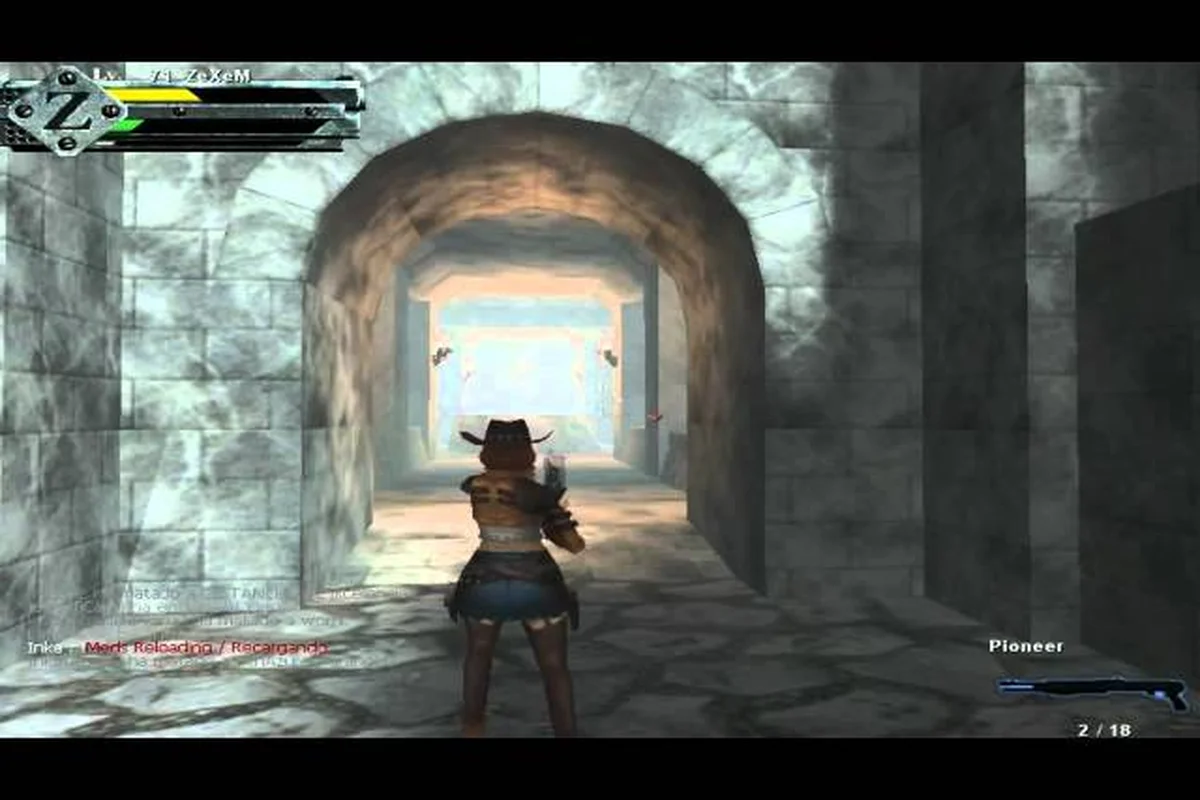
GunZ The Duel gameplay revolves around a hybrid combat system that blends close-range melee with long-range gunplay, and understanding how these mechanics work together is the difference between getting shredded in your first lobby and actually climbing the ranks. This remaster of the 2003 classic by Masangsoft launched globally on Steam on August 13, 2026, bringing back the fast-paced action that made the original a cult favorite. Whether you are here for the nostalgia or discovering it fresh, the combat system rewards players who invest time in learning its quirks, so let's break down exactly what you need to know before your first match.
The core loop is deceptively simple: you carry both a melee weapon and a firearm, and the game encourages you to swap between them mid-combo. Unlike traditional shooters where you commit to one weapon type, GunZ The Duel combat system lets you chain sword slashes into a revolver shot, then dash forward and finish with a katana overhead strike. This fluidity is what players call K-Style, a term you will hear constantly in lobbies, and it is the foundation of every advanced technique in the game. The official Steam page describes the combat as blending "close-range melee and long-range guns with fluid mid-combo weapon swaps," which is accurate but undersells how deep the system actually goes.
Understanding the GunZ The Duel Combat System
The combat system in GunZ The Duel is built around three pillars: melee attacks, gunplay, and movement mechanics. Each one feeds into the others, and mastering the transitions between them is what separates casual players from those who dominate leaderboards. The game gives you a sword, katana, or dagger for close quarters, plus a revolver, SMG, rifle, or shotgun for ranged engagements, and you can switch between them instantly during any animation.
What makes this different from other third-person shooters is that your melee weapon is not just a fallback option. Sword swings can be chained into combos, and each swing can be canceled into a gunshot or a dash, which opens up creative offensive options. The weapon swap mechanic is the heart of the system, because it lets you start a slash, cancel it into a shotgun blast, then immediately block an incoming attack, all within a second. According to the official GunZ: The Duel website, the remaster preserves this original combat feel while updating the netcode for modern infrastructure.
Here is a quick breakdown of the three pillars that define GunZ The Duel gameplay: slashing (melee sword combos), shooting (gunplay for chip damage), and movement (dash-canceling and wall-running). These aren't separate systems—they chain together through techniques like butterfly and half-step, where you cancel a sword swing into a gunshot to keep pressure while staying mobile. Mastering this cancel timing is the core of the GunZ The Duel combat guide, since it dictates whether you dictate the fight's pace or get locked down by a skilled opponent.
-
Melee combat: Sword, katana, and dagger attacks that can be chained into multi-hit combos. Each weapon has different range, speed, and damage values, so your choice matters.
-
Gunplay: Revolvers offer burst damage, SMGs provide sustained fire, rifles excel at range, and shotguns punish close-quarters aggression. Ammo management becomes critical during extended fights.
-
Movement: Dash, jump, and wall-run techniques let you reposition constantly. Movement is not just for evasion, it is an offensive tool that lets you close distance or create space mid-combo.
The combat system rewards aggression, but reckless aggression gets punished hard. Because blocks and dodges are generous, experienced players will bait you into committing to a combo, then punish your recovery frames. This creates a mind-game layer where you are constantly guessing whether your opponent will attack, block, or dash, which is why GunZ The Duel gameplay feels so intense compared to other shooters.
Melee Weapons and Their Roles
Your melee weapon is your primary tool for building combos, and each type serves a different role in the GunZ The Duel combat system. The sword is the balanced option, offering decent speed and damage with forgiving hitboxes, making it ideal for learning the basics. The katana trades some speed for higher damage and longer reach, which suits players who prefer a more methodical, spacing-based approach. The dagger is the fastest option with the shortest range, but it excels at chaining rapid hits that keep opponents locked in hitstun.
| Weapon | Speed | Damage | Range | Best For |
|---|---|---|---|---|
| Sword | Medium | Medium | Medium | Beginners, balanced play |
| Katana | Slow | High | Long | Spacing, punishing whiffs |
| Dagger | Fast | Low | Short | Combo chains, pressure |
Each weapon also has unique animation properties that affect how you can cancel into gunplay. The dagger, for example, has very short recovery frames, which means you can weave in gunshots more frequently between swings. The katana, by contrast, has longer recovery, so you need to be more deliberate about when you commit to a slash. Understanding these nuances is part of the GunZ The Duel mechanics that takes time to internalize, but it pays off in smoother combos and better decision-making.
Gunplay and Weapon Swap Timing
Gunplay in GunZ The Duel is not just about aiming and shooting, it is about timing your shots to land during gaps in your melee combo. The weapon swap cancel is the key technique here: you start a melee swing, swap to your gun mid-animation, and fire before the melee recovery completes. This lets you layer damage in ways that are impossible in other shooters, and it is the foundation of the famous K-Style playstyle that veterans use to dominate matches.
The timing window for swap cancels is generous enough that you can learn it within a few hours of practice, but tight enough that it rewards consistent execution. Different guns also have different swap speeds, which affects your combo potential. Revolvers swap fastest and are the go-to choice for burst damage, while rifles swap slower but offer better sustained damage at range. Shotguns sit in the middle, providing a devastating point-blank option that pairs well with dash-in approaches.
How Combat Mechanics Work in Practice
Understanding the GunZ The Duel mechanics on paper is one thing, but seeing how they work in practice is another. The game's combat is built around a cancel system that lets you interrupt almost any animation with another action. This is what enables the fast-paced, almost fighting-game-like flow that defines GunZ The Duel gameplay. Every slash, shot, dash, and block can be chained into something else, which means the only limit to your combo potential is your own execution speed.
The block mechanic is particularly important because it is your main defensive tool. Pressing block negates incoming melee damage, but it leaves you vulnerable to gunfire, which creates a rock-paper-scissors dynamic. If your opponent blocks, you can shoot them. If they shoot, you can dash in and slash. If they slash, you can block. This constant triangle of options is what keeps matches tense and rewards players who can read their opponent's tendencies.
A practical example clarifies how the dash-slash-dash cadence actually flows in a GunZ The Duel combat guide. Against a stationary training dummy, you would input a short dash, immediately follow with a slash (your standard sword swing), then cancel that slash's recovery animation by inputting another quick dash before chaining a second slash. This dash-slash-dash-slash sequence, often called a "butterfly" or basic step-cutting, is the foundation of the combat system; it lets you close distance while keeping your attack chain active and your character moving, making you a much harder target to hit than if you simply stood still and swung.
-
Open with a dash to close distance quickly.
-
Start a sword slash to initiate the exchange.
-
Cancel the slash into a revolver shot for burst damage.
-
Dash again to reposition or chase.
-
Finish with a katana overhead if the opponent is still in range.
This sequence takes about two seconds to execute, but it demonstrates how the cancel system lets you layer actions. The official Steam store page confirms that the game features "online PvP and co-op PvE quests," so you can practice these combos in PvE before testing them against real opponents.
The Role of Stamina and Resource Management
Stamina is the hidden resource that governs everything in combat. Every dash, slash, and block consumes stamina, and if you run out, you become vulnerable to punishment. This creates a natural pacing mechanic that prevents infinite aggression, because you need to manage your stamina carefully to avoid being caught with no options. The stamina bar is displayed in the HUD alongside health and ammo, and learning to read it is essential for high-level play.
| Action | Stamina Cost | Notes |
|---|---|---|
| Dash | Low | Main movement tool |
| Melee swing | Medium | Varies by weapon |
| Block | Medium | Sustains while held |
| Wall run | Low | Used for positioning |
Managing stamina is about knowing when to commit and when to back off. If you dump all your stamina into an aggressive combo and miss, you are left with no way to escape the counter-attack. Experienced players will bait you into overextending, then punish your empty stamina bar with a full combo of their own. This resource tension is a core part of the GunZ The Duel combat system, and it is what makes matches feel so strategic despite the fast pace.
Earning XP and Progression in GunZ The Duel
Progression in GunZ The Duel is tied to earning XP through matches, and understanding how the XP system works can help you level up faster. The game awards XP based on your performance in each match, with factors like kills, assists, objective play, and match completion all contributing to your total. Winning matches also grants a bonus, which means focusing on objectives rather than just chasing kills is often the more efficient path.
The XP curve is designed so that early levels come quickly, giving you a sense of progression, but later levels require significantly more investment. According to community reports, players who focus on completing PvE quests early on tend to level faster than those who jump straight into PvP, because quests offer consistent XP rewards without the variance of player matches. This is a useful tip if you are looking for a reliable GunZ The Duel XP guide that prioritizes efficiency.
Here is a breakdown of the main XP sources: Duel Mode (1v1) and Team Deathmatch (TDM) award the bulk of your progress, but the per-kill values differ sharply—TDM grants roughly 60% of the XP a 1v1 kill does, making it the faster grind for pure ranking. However, XP is also heavily weighted by K/D spread and finish time; a 10-minute, 15-kill Duel match yields more than a 5-minute TDM stomp. To maximize the GunZ The Duel XP guide potential, prioritize Quest Mode on higher difficulties (e.g., Hard) during double-XP weekends, where boss kills and wave completions contribute a flat bonus that bypasses the PvP decay curve, letting you rank up without relying on combat mechanics.
-
PvP matches: XP scales with performance, with kills and assists being the primary contributors.
-
PvE quests: Co-op quests offer fixed XP rewards and are great for consistent progression.
-
Match completion: Simply finishing a match grants baseline XP, win or lose.
-
Daily bonuses: Logging in and completing daily objectives provides bonus XP.
The progression system also unlocks new weapons and cosmetics as you level, which gives you tangible goals to work toward. If you are new to the game, focusing on the movement guide can help you build the foundational skills you need to perform well in matches, which in turn accelerates your XP gain.
Comparing XP Efficiency Across Modes
Not all game modes are created equal when it comes to XP farming. Based on community testing and player reports, PvE quests generally offer the most reliable XP per hour, especially if you can complete them quickly with a coordinated group. PvP matches offer higher potential XP per match, but the variance is much larger, because a bad match can leave you with minimal gains.
| Mode | XP per Match | Time per Match | XP per Hour | Consistency |
|---|---|---|---|---|
| PvP Duel | Medium | 10-15 min | Medium | Low |
| PvP Team | High | 15-20 min | High | Medium |
| PvE Quest | Fixed | 5-10 min | High | High |
The data suggests that a mix of both modes is optimal. PvE quests give you steady, reliable XP, while PvP matches offer the potential for bigger payouts and better skill development. If you are grinding for a specific level or unlock, prioritizing PvE quests is the safer bet, but you should still mix in PvP to keep your skills sharp.
Advanced Combat Techniques and K-Style
Once you understand the basics of the GunZ The Duel combat system, you can start exploring advanced techniques that define high-level play. The umbrella term for these is K-Style, which refers to the Korean-style playstyle that originated in the original game and has been preserved in the remaster. K-Style encompasses a range of techniques, from butterfly (rapid slash-cancel combos) to wall-dashing (using wall runs to chain dashes), and mastering these is the key to competing at the highest level.
The butterfly technique is one of the most iconic K-Style moves. It involves alternating between two melee swings and a gunshot in a rapid cycle, creating a continuous stream of damage that is difficult to escape. The timing is demanding, but the payoff is significant, because it lets you maintain pressure while also dealing ranged damage. If you want to learn this properly, the K-Style guide breaks down the exact inputs and practice routines.
Another essential technique is wall-dashing, which uses the wall-run mechanic to chain dashes in quick succession. This gives you incredible mobility and makes you much harder to hit, because you are constantly changing direction and elevation. Wall-dashing is particularly effective in maps with vertical elements, where you can use the environment to your advantage. The movement guide covers the fundamentals of wall-running and dashing, which are prerequisites for this advanced technique.
Building a Practice Routine
Improving at GunZ The Duel requires deliberate practice, not just playing matches. The best players spend time in training modes and custom lobbies working on specific techniques before applying them in real matches. A structured practice routine can accelerate your improvement significantly, because it lets you isolate individual skills and build muscle memory.
Start with 10 minutes of free-roam movement in Training Mode, chaining butterfly into half-step dash-cancel to build muscle memory for the 60–70 APM baseline that competitive play demands. Then move to sword-only sparring against a stationary bot, focusing on slash-shot timing and reload-cancel windows. Finish with 15 minutes of live duels, deliberately attempting risky wall-dash approaches to internalize hitbox forgiveness—reviewing replays afterward to track your dash-cancel success rate is the fastest way to identify which of the three core movement chains needs more reps.
-
10 minutes: Warm up with basic movement, dashes, and jumps to get your hands loose.
-
15 minutes: Practice weapon swap cancels, focusing on clean transitions between melee and gunplay.
-
10 minutes: Drill the butterfly technique, starting slow and gradually increasing speed.
-
10 minutes: Practice wall-dashes and wall-run chains on different maps.
-
15 minutes: Apply everything in a custom lobby against bots or a practice partner.
This routine takes about an hour and covers the core skills you need to improve. If you are serious about getting better, the how to improve guide offers additional tips and strategies for structured practice. Remember that consistency matters more than intensity, so a focused hour of practice every day will yield better results than a marathon session once a week.
Frequently Asked Questions
What is the GunZ The Duel combat system?
The combat system blends melee weapons like swords and katanas with firearms like revolvers and SMGs, allowing players to swap between them mid-combo. This creates a fluid, fast-paced experience where players chain slashes, gunshots, and dashes together. The system is built around animation cancels, which let you interrupt actions to create complex combos.
How do I earn XP faster in GunZ The Duel?
Focus on PvE quests for consistent XP gains, as they offer fixed rewards without the variance of PvP matches. Completing daily objectives and winning PvP matches also provides bonuses. According to community data, mixing PvE quests with PvP matches offers the best balance of reliability and potential for larger XP payouts.
What is K-Style in GunZ The Duel?
K-Style refers to the advanced playstyle that originated in the Korean GunZ community, characterized by rapid animation cancels and complex combo chains. Techniques like the butterfly and wall-dashing fall under this umbrella. Mastering K-Style requires significant practice, but it is the key to competing at high levels and dominating matches.
Do I need to learn advanced techniques to enjoy the game?
No, you can enjoy GunZ The Duel gameplay without mastering K-Style, especially in casual lobbies and PvE quests. However, learning basic animation cancels and weapon swap timing will improve your performance significantly. Advanced techniques become more important if you want to climb the ranked ladder or compete in tournaments.
What weapons are best for beginners?
The sword and revolver are the best starting loadout. The sword offers balanced melee stats for learning close-range combat, while the revolver provides reliable burst damage and fast swap speed for mid-combo weapon swaps. Master these fundamentals before experimenting with SMGs or katanas to build proper K-Style muscle memory.