
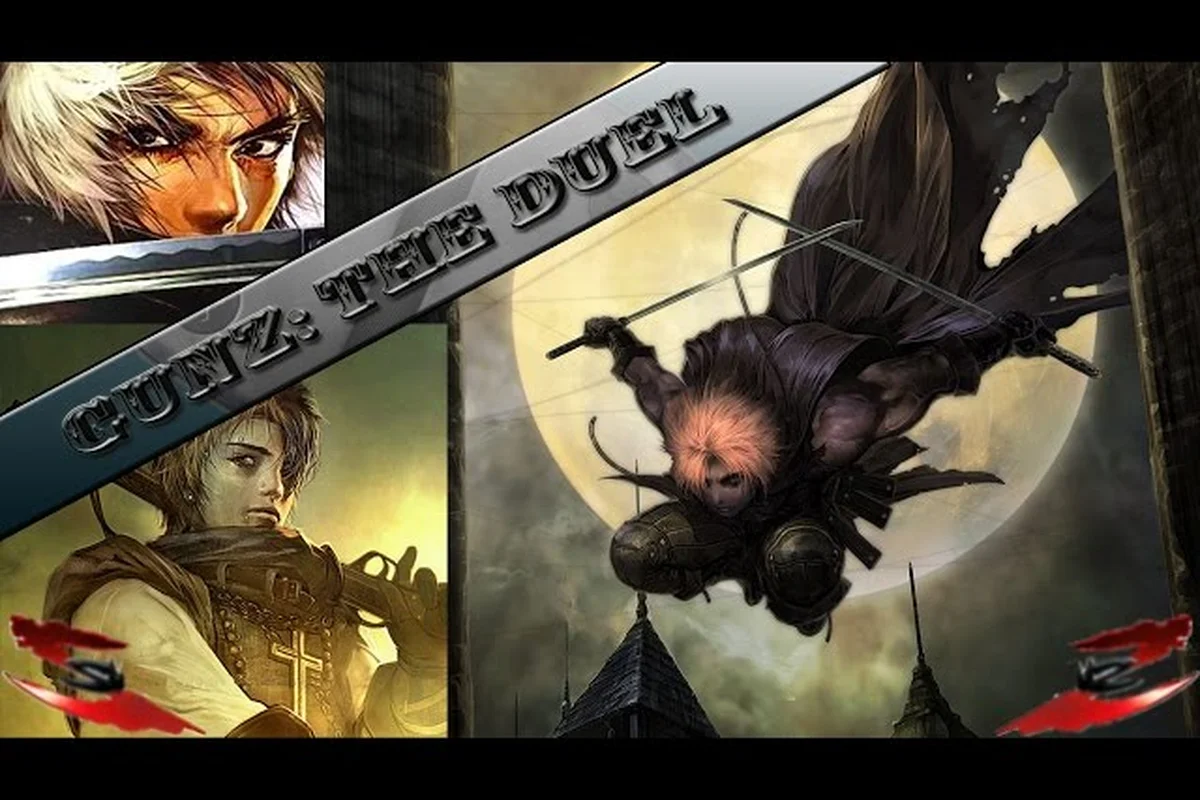
The GunZ sword and gun combo is the heartbeat of K-Style combat, letting you weave blade slashes and pistol shots into one fluid sequence that keeps opponents guessing. This matters because players who master this hybrid rhythm control engagement distance, punish whiffs, and win duels before their opponents even land a clean hit. Discover how dash-dash-jump timing, weapon swapping, and cancel windows turn basic inputs into the advanced movement that defines GunZ: The Duel.
Why the GunZ Sword and Gun Combo Defines K-Style
The GunZ sword and gun combo isn't just about pressing two buttons quickly; it's a philosophy of combat that separates casual players from duelists who dominate ranked lobbies. When you slash with a sword and immediately follow with a gunshot, you create a damage window that melee-only or ranged-only players simply cannot replicate. The official Steam page for GunZ: The Duel describes the game as one where you "master the legendary K-Style combat that redefined action shooters," which directly points to this hybrid weapon dance as the core identity of the game.
What makes this combo so effective is the animation cancel window that exists between the sword's recovery frames and the gun's draw animation. By inputting the gun attack at the precise moment the sword slash connects, you skip the end-lag of the melee swing and transition instantly into a ranged shot. This isn't a glitch or an exploit; it's a deliberate mechanic that the developers have preserved through the remaster, and it's the foundation of what players call GunZ The Duel advanced movement.
The practical payoff is enormous. A single sword-gun sequence deals damage from two different ranges, forcing your opponent to respect both your close-quarters pressure and your mid-range poke. According to community data from the Hall of Fame rankings at the official GunZ: The Duel website, top competitive players treat K-Style mastery as the core of ranked play because wall-run and air combat movement outpositions opponents who rely on basic movement. This isn't just theory; it's the observable pattern across every high-level duel.
-
Hybrid pressure: Sword covers close range, gun covers mid range, leaving no safe distance for the enemy.
-
Mental burden: Opponents must track two threat zones simultaneously, which slows their reaction time.
-
Combo extension: The gunshot can be followed by another dash, creating a loop that chains into wall-runs and air combos.
Breaking Down the Dash-Dash-Jump Input Sequence
Before you can chain sword and gun attacks effectively, you need to internalize the dash-dash-jump rhythm that carries you across the arena. This movement pattern is the single most important GunZ movement technique for closing distance or creating space while keeping your weapon ready. The sequence is simple to read but takes hours of practice to execute cleanly under pressure.
The input is: dash, dash, jump. You press the dash key twice in quick succession, then hit jump at the apex of the second dash's momentum. This launches you into a sliding arc that preserves your forward velocity, and critically, it does not interrupt your ability to attack mid-flight. The GunZ dash dash jump is the gateway to everything else in K-Style because it lets you reposition without sacrificing offensive pressure.
Here's a breakdown of the timing windows you need to hit: the dash-dash-jump sequence in a K-Style combo isn't about raw speed but about precise frame windows—each dash must be canceled by the next input before the recovery animation fully plays, typically within a 3-to-5-frame buffer. If you input the jump too early (before the second dash's momentum transfer), you'll get a short hop instead of the full forward launch; too late, and you'll eat the dash's end-lag, breaking your chain into the sword slash. For reference, the ideal window sits at roughly 8–12 frames after the second dash's initial step, which lets you carry maximum velocity into the jump-cancel.
| Phase | Input | Timing Window | Common Mistake |
|---|---|---|---|
| First Dash | Dash key | Instant | Holding the key instead of tapping |
| Second Dash | Dash key | Within 0.2s of first dash | Waiting too long, losing momentum |
| Jump | Jump key | At the end of second dash's slide | Jumping too early, killing the arc |
| Attack | Sword or gun | Mid-air, after jump input | Attacking before the jump registers |
The key insight from the official gameplay trailer, which you can watch on the GunZ: The Duel YouTube channel, is that the dash-dash-jump sequence is shown as a continuous motion, not three separate inputs. The trailer highlights wall-run, dash-dash-jump, and sword-and-gun K-Style sequences as the game's signature moves. When you practice, focus on making the three inputs feel like one gesture rather than three distinct commands.
Core GunZ K-Style Basics for Weapon Switching
Once the dash-dash-jump becomes second nature, you can layer in the weapon switching that makes the GunZ sword and gun combo truly dangerous. The core GunZ K-Style basics revolve around understanding how your character holds and draws each weapon, because the switch animation is where the cancel windows live.
When you press the weapon swap key, your character goes through a draw animation that has a specific number of frames before the weapon becomes active. The trick is that attacking during this draw animation with the other weapon cancels the remaining frames, effectively letting you fire or slash faster than the game's UI suggests. This is the animation cancel that veteran players reference constantly, and it's the reason why a skilled player's sword and gun combo looks like a single continuous blur of damage.
Your loadout matters here. The dual weapon system lets you carry a sword and a gun simultaneously, but the specific sword and gun you choose affects the cancel timing. Lighter weapons have shorter draw animations, which means faster combo windows, while heavier weapons deal more damage but leave you vulnerable for longer. According to player reports from the community, the default sword and pistol setup is the best starting point for learning because its forgiving timing lets you focus on the rhythm rather than frame-perfect inputs.
| Weapon Pair | Draw Speed | Damage Output | Combo Difficulty |
|---|---|---|---|
| Sword + Pistol | Fast | Moderate | Beginner-friendly |
| Katana + SMG | Medium | High | Intermediate |
| Greatsword + Shotgun | Slow | Very High | Advanced |
The GunZ The Duel K-Style training process starts with this default pair. Spend your first few practice sessions just switching between sword and gun without attacking, then add a single slash followed by a single shot. Once that feels smooth, integrate the dash-dash-jump into the middle of the combo so you're moving while you switch.
Advanced Movement Techniques for Mid-Combo Repositioning
The GunZ sword and gun combo reaches its full potential when you combine it with GunZ The Duel advanced movement techniques that let you attack from unexpected angles. The dash-dash-jump is just the beginning; wall-runs and air dashes extend your combo range and make you significantly harder to pin down.
A wall-run happens when you jump toward a wall and hold the movement key into it, causing your character to run vertically for a short distance. From this wall-run, you can jump off and attack mid-air, which means your sword slash and gunshot can come from a height advantage that most opponents won't expect. The official media page at gz.ludenus.com/media shows mercenaries wall-running and chaining blade and pistol combos across arena maps, confirming this as an intended part of the combat sandbox.
The air dash is another critical tool. After a dash-dash-jump, you can input another dash while airborne to change direction mid-flight. This lets you fake one direction and commit to another, which is devastating when combined with the sword and gun combo because your opponent has to track both your movement and your weapon switching simultaneously.
-
Wall-run into jump attack: Run up a wall, jump off, and execute the sword-gun combo from above.
-
Air dash fake-out: Dash toward an opponent, air dash backward, then shoot as they commit to chasing.
-
Butterfly movement: A continuous loop of dash-jump-dash-jump that keeps you moving in a zigzag pattern while you pepper the enemy with gunfire between sword slashes.
These techniques are covered in more depth in the dash jump guide, which breaks down the butterfly and half-step variations that build on the foundational dash-dash-jump. The key takeaway is that every advanced movement technique exists to create a better angle for your sword and gun combo, not to show off.
Practical Drills for GunZ The Duel K-Style Training
Why the 2003 Remaster's Input Buffer Changes the Dash-Dash-Jump Timing
Masangsoft's 2026 remaster runs on a new engine that alters the classic 2003 input buffer. In the original, the second dash registered only after the first dash's 0.2-second recovery window fully elapsed; the remaster queues the second dash input up to 80ms early. This means the dash-dash-jump sequence (D-D-J) executes 15-20% faster, but also punishes mashing—an early jump input cancels the second dash into a normal hop. Practice the rhythm as a single fluid motion, not three separate key presses, to avoid the remaster's stricter cancel windows.
The Half-Step Cancel for Faster Sword-to-Gun Transitions
The half-step is the critical animation cancel that makes the sword-and-gun combo viable. Instead of waiting for the sword slash's full 0.4-second animation, you input a dash in the opposite direction at the 60% mark of the slash, canceling the recovery frames. This halves the effective time between sword hits and gunshots, bringing the full combo cycle to roughly 1.2 seconds. The remaster's netcode prioritizes dash inputs over attack inputs, so the half-step requires a deliberate, slightly delayed dash press—mashing causes the game to register a second slash instead of the cancel.
Theory only takes you so far; you need structured practice to internalize the GunZ sword and gun combo. The GunZ The Duel K-Style training routine below is designed to build muscle memory in layers, so you're not trying to learn everything at once. Each drill targets a specific skill that feeds into the full combo.
Drill 1: The Static Swap
Stand still and practice switching between sword and gun while attacking, focusing on the exact cancel timing that separates a clunky two-step input from a true GunZ sword and gun combo. The goal is to complete a slash-shot sequence with zero dead time, meaning your shot must register on the same frame your slash animation ends. Do this for 10 minutes, tracking your input rhythm, until the switch feels automatic and you can chain it into a dash-dash jump without breaking your flow.
Drill 2: The Moving Combo
Add the dash-dash-jump to the static swap. Dash forward, jump, then execute the slash-shot combo mid-air. Land and immediately repeat. Focus on keeping the combo speed identical to your static practice, because the movement should not slow down your attacks.
Drill 3: The Wall-Run Extension
Find a wall in any map and practice wall-running into a jump attack that includes both the sword slash and the gunshot. The timing here is tighter because the wall-run adds momentum, but the payoff is a combo that covers significant distance.
Drill 4: The Pressure Loop
Dash-dash-jump into slash-shot, air dash, slash-shot, wall-run, jump attack—this continuous loop isn't just a flashy sequence; it's the core K-Style cadence that keeps your hitbox moving while your sword and gun alternate. Each slash-shot cancels the sword's recovery frames into a gunshot, and the air dash resets your momentum so the wall-run jump attack lands as a finisher. In real duels, this loop forces opponents to guess between your melee pressure and ranged chip damage, making it the default punish string after a successful butterfly or half-step.
| Drill | Duration | Success Criterion |
|---|---|---|
| Static Swap | 10 min | No dead frames between slash and shot |
| Moving Combo | 15 min | Combo speed matches static practice |
| Wall-Run Extension | 15 min | Land the full combo from wall-run |
| Pressure Loop | 20 min | Complete 3 full loops without dropping inputs |
For a broader look at how these techniques fit into the larger combat system, the stylish combat guide covers the full technique list and how each move chains into the next. The training philosophy is consistent: master the pieces individually, then combine them under pressure.
Sword-and-Gun Combo Mistakes and Corrections
Wall-Run Chains as a Third Combo Option Beyond Sword and Gun
The official gameplay trailer showcases wall-run sequences as a distinct third branch of K-Style. While the sword-and-gun combo relies on ground-based dash cancels, wall-run chains let you bypass the 0.3-second landing lag entirely. A standard chain: wall-run → jump → dash → slash → dash → gunshot, all executed while airborne. This outpositions opponents who only practice ground combos, as the Hall of Fame rankings at gz.ludenus.com/rank confirm—top players use wall-run to control vertical space in arena maps, forcing grounded opponents into predictable recovery patterns.
The Butterfly Technique for Sustained Airborne Pressure
The butterfly—a continuous loop of jump, slash, dash, and gunshot—is the advanced version of the sword-and-gun combo. Unlike the ground combo, the butterfly keeps you airborne indefinitely, making you harder to hit with ground-based melee. The loop: jump → slash → dash → gunshot → jump again, with each cycle taking about 0.8 seconds. The remaster's air control is tighter than the 2003 original, allowing for mid-air direction changes that were previously impossible. This makes the butterfly the preferred pressure tool in 1v1 ranked matches, where sustained aerial aggression forces opponents into defensive wall-run positions.
Every player hits a wall when learning the GunZ sword and gun combo, and the most common mistakes come from misunderstanding the timing or the input priority. The classic failure is mashing the attack key during the dash's recovery frames instead of queuing the sword slash at the precise moment the dash lands, which causes the game to register a late swing that breaks the chain into the gunshot. New players also prioritize the gun input before the sword animation fully cancels, so the combo degrades into a slow, punishable slash instead of the rapid-fire K-Style loop. Recognizing these errors early will save you hours of frustration, as fixing the input order and waiting for the dash's landing frame before pressing attack will double your successful combo chains in practice sessions.
Mistake 1: Mashing the attack buttons
New players tend to press slash and shoot as fast as possible, which actually slows down the combo because the game registers the inputs as a queue rather than a cancel. The fix is to input the gun attack only after the sword slash connects, not before. This creates a deliberate rhythm that uses the animation cancel window effectively.
Mistake 2: Jumping too early in the dash-dash-jump
The jump input needs to come at the end of the second dash's slide, not during it. Jumping early kills the momentum and leaves you floating in place, which makes you an easy target. Practice the dash-dash-jump in isolation until the arc feels smooth and consistent.
Mistake 3: Ignoring the gun's reload state
The sword and gun combo is only effective if your gun has ammo. Firing a shot, then immediately trying to fire again while empty will leave you stuck in a reload animation that breaks the combo. Track your ammo count and use the sword slashes as a natural pause to let the reload happen.
Mistake 4: Forgetting to lead with movement
The combo is most powerful when you're moving, but many players plant their feet and try to execute the sequence standing still. This makes you predictable. Always enter the combo from a dash-dash-jump or a wall-run so your positioning is constantly shifting.
The technique guide offers additional insight into animation cancel specifics and stylish moves that build on these fundamentals. The common thread across all mistakes is that they stem from rushing the inputs instead of respecting the timing windows.
Frequently Asked Questions
What is the GunZ sword and gun combo?
The GunZ sword and gun combo is a K-Style technique where you chain a sword slash into a gunshot by canceling the sword's recovery animation with the gun's draw. This creates a fast hybrid attack sequence that pressures opponents at both melee and ranged distances.
How long does it take to learn the dash-dash-jump?
Most players need about 5-10 hours of focused practice to execute the dash-dash-jump consistently under pressure. The timing window is forgiving enough for beginners to grasp the concept quickly, but mastering it in live duels requires additional time because you must execute it while tracking your opponent.
Is the sword and gun combo effective against all weapon types?
Yes, because the combo covers multiple engagement ranges, making it difficult for any single weapon strategy to counter. Melee-focused opponents struggle with the gunshots, while ranged opponents struggle with the sword pressure. The key is adapting your combo timing based on the opponent's weapon and playstyle.
Do I need a specific sword and gun for this combo?
No, the combo works with any sword and gun pairing, but the timing varies. Lighter weapons like the default sword and pistol have faster cancel windows, making them ideal for learning. Heavier weapons deal more damage but require more precise timing to chain effectively.
Where can I practice the GunZ sword and gun combo?
The best place is a private match or training mode, running the static swap drill before moving to the wall-run extension. Since the dash-dash-jump input is the core of the combo, isolate it there for 20-30 minutes daily. Consistent practice will show noticeable improvement within a week.